The Remembered of Pauper’s Field
The Remembered of Pauper’s Field
In honor of Julie Fineman and Constellation of Living Memorials. Originally published in winter 2017.
by Amy Martin
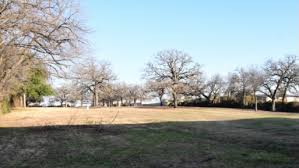
Wedged between warehouses in an area along Harry Hines best known for its sex trade, the old pauper’s graveyard, officially termed Dallas City Cemetary, has no historical plaque, no sign to identify that the dead rest here. On the south side facing Myrtle Springs, a narrow empty lot serves as the forgotten public entrance. Nearly lost among the weeds, a ragged double line of small trees ambles up to a gap in the fence, a failed boulevard entrance to a back-lot cemetery.
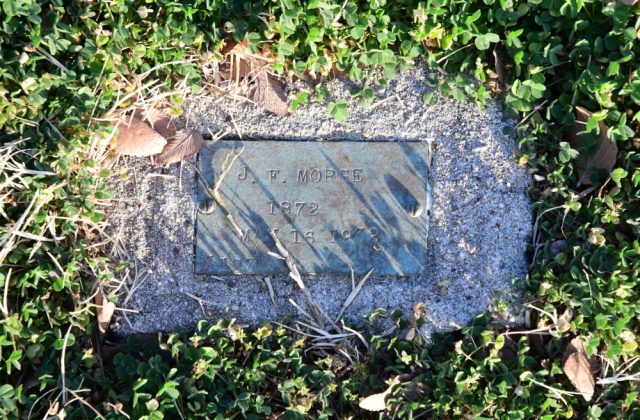
It looks like an empty field, particularly in spring and summer when weeds grow thick and green. But on a bright sunlit day when the ground cover has faded, look closely and you’ll see randomly scattered pale gray spots. Each one is a concrete grave marker barely six inches wide, struggling in vain to stay above the encroaching ground.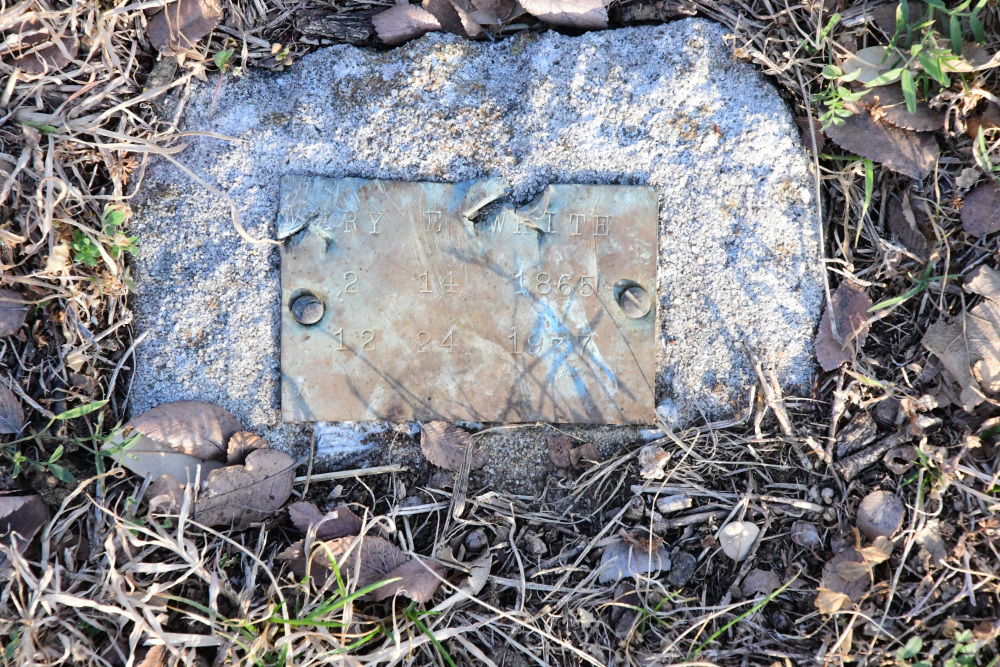
Though Dallas has emotionally exiled this pauper’s field, some of the deceased buried here are still remembered by those left behind. Mourning a family lost over 50 years ago, last December someone placed bouquets of artificial flowers on the graves of two stillborn sons Roy and Woodrow, as well as their mother Doris Shipp who died on Winter Solstice, three days after giving birth for the second and last time.
Unique in the cemetery, each Shipp burial was marked by a larger handmade concrete monument and the dirt surrounding the slabs carefully dug away. The names and birth and death dates were carved in and painted black. Doris’ sizable stone had the word “Mother” emblazoned across. On a cold January afternoon, the flowers on all three graves remained splashes of color in a bleak domain.
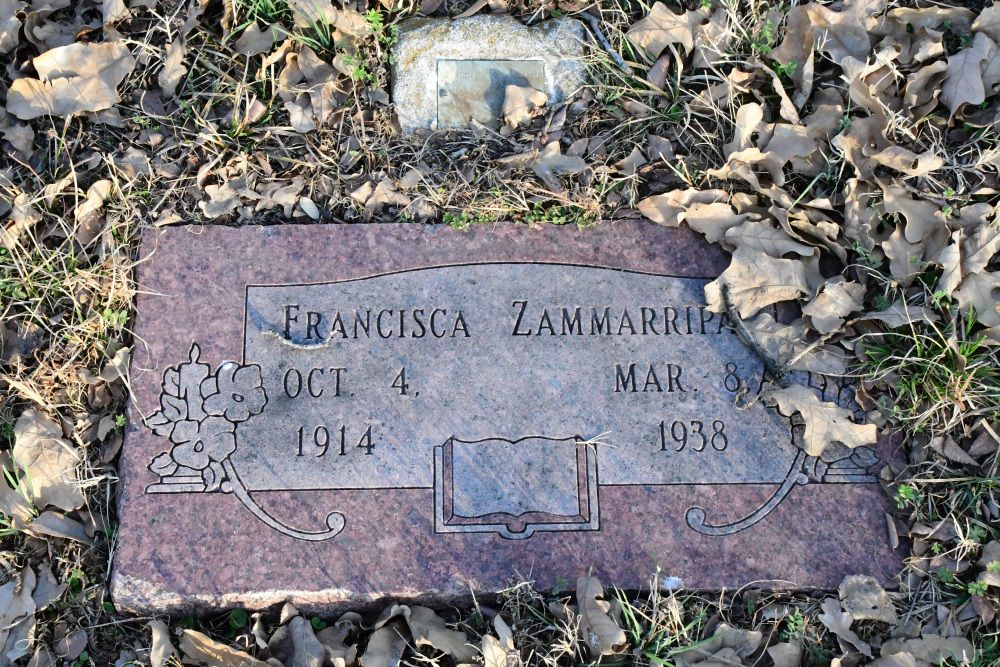
Francisca Zammarripa’s family wanted her remembered as she was, a young lady whose life ended at age 24. Next to her pauper’s stone is a large graceful marble memorial, purchased and placed after her death when family fortunes improved. Though lovingly surrounded by a bramble of miniature roses, the markers have been nearly consumed by dirt and weeds. At a nearby grave, a pot of plastic poinsettias marked a holiday season visit. A burst of wind sent yet another bouquet of fake flowers rolling across the grass, a tumbleweed of memories now lost from its intended.
The commemorated are few in this field. Some graves are noted only by an indentation where a corpulent body decayed. Most markers have sunk into the soil, and many that managed to stay above ground have had nameplates stripped by vandals and sold for cash. A marker that reads “unidentified inft” defiantly protrudes plate and all, prominent as a bump in the road leading beer drinkers and the libidinous to the secluded back area. Records state the remains of another unidentified infant were dug up and reinterred elsewhere, an act which evokes a plethora of sad scenarios.
Burials have been made in pauper’s field since the mid to late 1800s, when Shady Trail was an unnamed wagon road along the west side of J.B. Shade’s property. The depression and dustbowls of the 1930s forged its heyday. A large transient population, displaced by hard times, passed through North Texas, many from rural areas to the south.
In the cemetery’s records, still on file in the Dallas Public Library’s genealogy department, Hispanic names are the most common. But many in the cemetery seem as if they belonged to folks just passing through: Italian emigrants, French traders, and Jewish settlers on their way to better days in the west, fording the Trinity River at the nearby California Crossing.
All too many entries show that the departed met their demise on the same day as their birth. Several are listed simply as “unidentified male” or “unidentified female,” with no date of birth provided. Burials diminished after World War II and ceased in the ’70s. The later the date of death, the less information was listed, a testament to the increasing modern facelessness of that century.
Like many old cemeteries, pauper’s field of Dallas lies along conduits of movements such as rivers and railroads, existence’s transience shadowed by civilization’s perpetual movement, itself a tirade against the relentless truth of death. A northwestern route, first for cattle, then for railroads, and lastly for vehicles, has for centuries traced the outer bluff of the Trinity’s sprawling floodplain. Those dying in passage have long been left behind.
Souls no longer come to rest, if they ever truly do, at pauper’s field. The city now contracts out to large memorial parks to process unclaimed bodies. A stack of concrete markers leans against a tree in the rear of Dallas City Cemetery, never to be used. Pauper’s field is a place of transience and passage, of lost youth and hard times, on a ghost road leading back to an era that Dallas seems destined to forget.
Photos courtesy of Dallas Pioneer Association.